• Skip to primary navigation
  • Skip to main content
  • Skip to primary sidebar

Rust Bullet Australasia

Aluminium based rust inhibitor and corrosion cure protective coating

Rust Bullet Australasia

Stephen : 0415 168 902
Email: info@rustbullet.com.au

  • HOME
    • Rust Bullet Best Rust Prevention Paint Australasia
    • Rust Bullet Automotive
    • Black Shell
  • RUST BULLET ADVANTAGE
    • Cost of Corrosion
    • Why Rust Bullet
  • SHOP
  • VIDEOS
    • Applying Rust Bullet
    • Rust Bullet Presentations
    • Rust Bullet Demonstrations
  • PROJECTS
    • Automotive
    • Home & Farm
    • Industrial
    • Marine
    • Concrete
  • TECH
    • Application Guidelines
    • Coating Failures
    • How it Works
    • Lab Tests
    • MSDS & Data
    • Product Comparisons
  • CONTACT
  • FAQ
  • NEWS
  • 0 items$0.00
You are here: Home / Australia / Process of Corrosion Metal Corrosion Australia

Process of Corrosion Metal Corrosion Australia

Rust Bullet

process of corrosionProcess of Corrosion

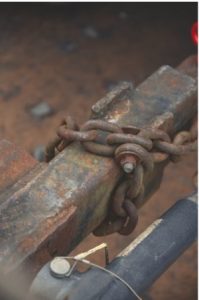
The process of corrosion is where metals progressively decline through chemical reactions, usually with moisture and oxygen.

The harsh climate in Australia, particularly along the coastline creates a powerful process of corrosion for metal.

What is Corrosion?

Corrosion is a natural process when metals and similar materials undergo a chemical reaction to the environment. This chemical reaction which is driven by corrosive substances such as moisture and oxygen causes the metal to eventually degrade.

The visible signs of corrosion are tarnishing and rusting, which eats away at the metal. Understanding the degradation that corrosion can have to metal means knowing its environmental, safety, and economic impact.

The most seen effect of metal corrosion is rust. Although rust occurs in different types of metals, iron is arguably the most common.

Iron and metals made from iron such as steel will start the corrosion process in the presence of oxygen and moisture.

Copper and Aluminium are metals that are less vulnerable to the corrosive process, but it can still occur under specific conditions. For copper, a green patina forms on the surface in the presence of moisture and airborne pollutants.

The patina creates a protective barrier and is often left on copper surfaces such as the Statue of Liberty.

Aluminium is highly resistant to natural corrosive processes. But one exception occurs in the presence of chloride ions.

The result is the creation of a protective layer of aluminium hydroxide. Thence it will cover the metal, not unlike the green patina of copper.

Different Types of Corrosion

There are several types of corrosion, each of which has unique characteristics. The seven basic types include the following.

– Erosion: Caused by exposure to corrosive environment
– Galvanic: When two or more dissimilar metals meet each other
– Intergranular: Metal with distinct grain boundary
– Localised: Corrosion on specific area as opposed to across the metal
– Selective Leaching: The dissolution of one or more alloy components
– Stress or Cracking: Created by tensile stress that causes cracking
– Uniform: Corrosion that occurs across the surface of the metal

Some types of corrosion are more common than others. For the most part, all of them can be prevented by taking the proper precautions.

Metal Corrosion Prevention

There are ways to slow down and even prevent corrosion from occurring in metal. It begins by cleaning the surface and removing any traces of rusting or contaminants that might be present.

Followed by application of a coating such as varnish, sealant, or paint. Hence, this creates a barrier between the metal and corrosive agents.

Once applied, the surface will need to be periodically inspected and maintained to ensure that the metal is protected. It also helps if the environmental conditions in which the metal is present is less conducive to the corrosion process.

Reducing the presence of moisture and heat will help provide rust protection.

Plus, be sure to use compatible materials so that galvanic corrosion does not occur. Metals that are not compatible tend to have electrochemical properties that may interact and start the corrosion process.

In Australia, metal corrosion can be prevented by properly preparing and protecting the surface so that the process of corrosion does not begin.

Rust Bullet Australasia’s team can help you with any questions you may have on this process. We also have products in our shop that will slow this process down. Contact us via our website or call on 0415 168 902. 

Filed Under: Australia, Corrosion Tagged With: aluminium, metal corrosion, paint application, rust, rust protection

Primary Sidebar

Categories

  • Application Guidelines
  • Applying Rust Bullet
  • Australia
  • Automotive
  • Boats
  • Coating Failures
  • Concrete
  • Corrosion
  • Home & Farm
  • How it Works
  • Industrial
  • Lab Tests
  • Marine
  • MSDS & Data
  • New Zealand
  • Painting Systems
  • Paints and Coatings
  • Presentations
  • Press Releases
  • Product Comparisons
  • Project Videos
  • Projects
  • Qualification Procedures
  • Rust Bullet Testimonials & Reviews
  • Rust Prevention
  • Rust Protection
  • Rust Protection Articles
  • Rust Research
  • Ships
  • SSPC Standards
  • Surface Preparation
  • Technical
  • Technology Reports
  • Technology Updates
  • Types of Use
  • Uncategorized
  • Why Choose Rust Bullet

Recent Posts

  • Process of Corrosion Metal Corrosion Australia
  • Rust Inhibitor Paint Rust Prevention Corrosion Australia
  • Corrosion Protection Rust Paint Australia Automotive
  • Corrosion Prevention Rust Paint Applications Australia
  • Rust Inhibitor Australia

Archives

  • August 2025
  • June 2025
  • April 2025
  • February 2025
  • December 2024
  • October 2024
  • August 2023
  • May 2023
  • March 2023
  • January 2023
  • November 2022
  • September 2022
  • July 2022
  • May 2022
  • March 2022
  • December 2021
  • November 2021
  • September 2021
  • July 2021
  • May 2021
  • March 2021
  • January 2021
  • November 2020
  • September 2020
  • July 2020
  • May 2020
  • March 2020
  • January 2020
  • November 2019
  • September 2019
  • July 2019
  • April 2019
  • February 2019
  • December 2018
  • October 2018
  • July 2018
  • June 2018
  • March 2018
  • November 2017
  • September 2017
  • May 2017
  • March 2017
  • November 2016
  • August 2016
  • May 2016
  • February 2016
  • October 2015
  • July 2015
  • April 2015
  • March 2015
  • January 2015
  • December 2014
  • November 2014
  • July 2014
  • May 2014
  • March 2014
  • August 2010
  • July 2010
  • June 2010

Rust Bullet

A simple to apply, low maintenance rust inhibitor, protective coating with phenomenal adhesion.

  • Stop Rust Permanently

Rust Bullet Automotive

Stop rust permanently. Scientifically proven for rust prevention, rust proofing & rust removal

  • Stop Rust Permanently

Rust Bullet Black Shell

Designed specifically as the optimum top coat for Rust Bullet and Rust Bullet Automotive

  • Stop Rust Permanently

Rust Bullet Australasia

224 Mooloolaba Rd
Buderim, QLD 4556

Stephen : 0415 168 902

Email: info@rustbullet.com.au
Support: support@rustbullet.com.au
Sitemap

Home   Terms & Condition  
Privacy Policy   Rust Bullet on Facebook

Copyright © 2026 Rust Bullet Australia. All Rights Reserved.
Web Redesign by 1 2 Website